
Cyber incidents remain the top identified risk to businesses in the UK. Cyber threats are constantly evolving as hackers and criminals gain access to new technologies or find new ways to exploit old vulnerabilities. Hackers are beginning to use artificial intelligence (AI) powered language models to increase the speed and scope of ransomware attacks, as well as create new malware and produce highly convincing phishing emails and deep fakes.

The top risks for UK businesses in 2024
Posted: 16 January 2024
The Allianz Risk Barometer is an annual global report identifying the top corporate risks for the year ahead.
It’s based on the insight of over 3,000 risk management experts from 92 countries and territories including CEOs, risk managers, brokers and insurance experts and is being published for the 13th time.
We take a closer look at the report's UK data and explain what the top risks are for the UK in 2024.
The UK's top 10 risks for businesses in 2024
(e.g. cyber crime, IT network and service disruptions, malware/ransomware, data breaches, fines and penalties)
(including supply chain disruption)
(e.g. storm, flood, earthquake, wildfire, extreme weather events)
#4
Shortage of skilled workforce
#5
Climate
change
(e.g. physical, operational and financial risks as a result of global warming)
#5
Political risks and violence
(e.g. political instability, war, terrorism, coup d’état, civil commotion, strikes, riots, looting)
#7
Changes in legislation and regulation
(e.g. tariffs, economic sanctions, protectionism, Euro-zone disintegration)
#7
Macro-economic developments
(e.g. inflation, deflation, monetary policies, austerity programmes)
#7
New technologies
(e.g. risk impact of AI, autonomous vehicles, lithium-ion batteries, electric vehicles, Metaverse)
#10
Market developments
(e.g. intensified competition/new entrants, M&A, market stagnation, market fluctuation)
1. Cyber incidents (#1 in 2023)
e.g. cyber crime, IT network and service disruptions, malware/ransomware, data breaches, fines and penalties.
Data breach is the cyber exposure of most concern, according to the Allianz Risk Barometer. According to the 2023 Cyber Security Breaches Survey, carried out by the Department for Digital, Culture, Media & Sport, 32% of UK businesses identified a cyber-security breach or attack in the last 12 months.
The most common and most disruptive form of security breach is phishing – employees receiving fraudulent emails or being directed to fraudulent websites1.
If a cyber-attack targeting customer data is successful, businesses may lose customers, industry reputation, brand trust, and could even face fines or penalties by the Information Commissioners Office (ICO).

The global picture
Cyber incidents is also the top global risk in the Allianz Risk Barometer – for the first time by a clear margin (36% of responses, 5 percentage points ahead).
Read more from the UK
Read our recent articles on keeping businesses safe from phishing and protecting customer data.
2. Business interruption (#2 in 2023)
Including supply chain disruption

Despite an easing of post-pandemic supply chain disruption in 2023, and risk management actions taken by companies, business interruption retains its position as the second biggest threat for the UK.
The Allianz Risk Barometer results show that the most common actions businesses are taking to de-risk their supply chains are: developing alternative suppliers; improving business continuity management; and identifying and remediating supply chain bottlenecks.
However, business interruption is closely linked to many of this year’s highly ranked risks, such as cyber, natural catastrophes, and fire, and remains a key concern in a rapidly changing world.
The global picture
Despite an easing of post-pandemic supply chain disruption in 2023, and risk management actions taken by companies, business interruption (31%) retains its position as the second biggest threat in the global 2024 survey.
Read more from the UK
Read our article on creating a business continuity plan.
Despite an easing of post-pandemic supply chain disruption in 2023, and risk management actions taken by companies, business interruption (31%) retains its position as the second biggest threat in the global 2024 survey.
Read more from the UK
Read our article on creating a business continuity plan.
3. Natural catastrophes (new for 2024)
e.g. storm, flood, earthquake, wildfire, extreme weather events
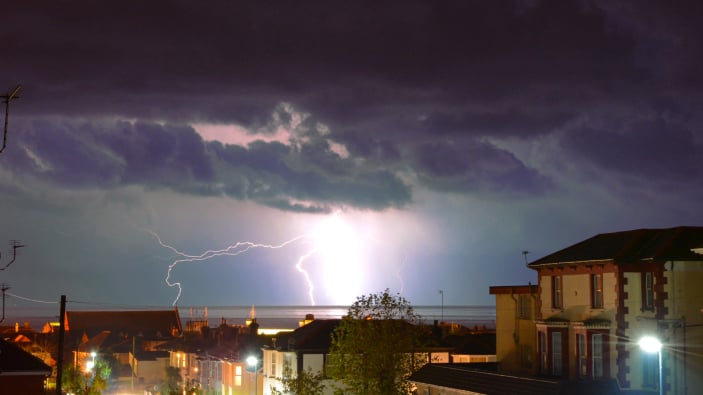
In a sign that businesses are feeling the impact of extreme weather and climate events, natural catastrophes is new for 2024 and ranks at #3 in the UK.
It was the hottest year since records began, according to the World Meteorological Organization, while insured losses in 2023 exceeded $100bn for the fourth consecutive year. Losses from severe thunderstorms reached a new all-time high of $60bn. Climate records were shattered in 2023 including sea surface temperatures, sea level rise, and low Antarctic sea ice.
Physical damage and business interruption are the two direct impacts of climate change businesses fear most.
When it comes to mitigation actions, the major company implementations are: transitioning to low-carbon business models, and improving planning and response to climate events, including adopting measures to improve the ability of sites to cope with extreme weather.
Businesses are also seeking protection and financing mechanisms to address the growing climate insurance protection gap, while boosting supply chain resilience is expected to be a key area of focus in 2024.

The global picture
Natural catastrophes is also third in this year’s global survey. In a sign that companies are feeling the impact of extreme weather and climate events, it ranks #3, up three positions on last year.
Read more from the UK
Read our guidance on how to protect properties and vehicles from flooding and storms and cold weather.
For a detailed look at the global risks read the full global Allianz Risk Barometer 2024 report.
It has insight and results separated by country and the most important business risks by industry sector.
You might also be interested in













.jpeg)














Follow us
1. Computer Weekly - UK suffers third highest number of ransomware attacks globally
2. EY UK - Recession likely to be deeper - but not longer - than previously expected
3. Gov.uk - Russia-Ukraine and UK energy: factsheet
4. Construction News - Skills shortage reaching 'alarming proportions'
2. EY UK - Recession likely to be deeper - but not longer - than previously expected
3. Gov.uk - Russia-Ukraine and UK energy: factsheet
4. Construction News - Skills shortage reaching 'alarming proportions'