Published 5 May 2026

Front door lock insurance requirements: your complete guide
Having the right locks on your front door isn't just about security – it's essential for keeping your home insurance valid. Most insurers require specific types of locks to meet minimum security standards, and without them, you could find yourself unable to claim if the worst happens.
Here's what homeowners need to know:
- Which types of locks insurers require for front doors.
- How to check your locks meet the right standards.
- What happens if you don't have the correct locks fitted.
Why the right locks keep you properly secured and insured
It may surprise you to learn that you might not be insured if you don't have certain types of locks on your external doors and windows. Here's the thing – when you apply for home insurance, your insurer will check what locks you have fitted. If they don't meet the required standards, you could face a rejected claim later on.
The numbers tell the story. Over two-thirds of break-ins happen through the front door, and more than three quarters of burglaries occur through doors rather than windows. In over a quarter of incidents, burglars force locks, while one in five simply walk in through an unlocked door.
So if you don't have quality locks, properly fitted, you're leaving yourself open to theft. And just like if you leave a window open when you go out, your insurer isn't obliged to pay out when you make a claim.
The right locks can help keep your home secure and stop you looking like an easy target for burglars. For homeowners, securing your house with the right types of locks can make a big difference to your personal security and your home or contents insurance.
It pays to have the right house locks
Home insurance companies may expect a minimum level of security on entrances to your home, especially ground floor doors and windows. They'll usually ask if you have these locks in place already, and if you don't, you're given a few weeks to get them fitted.
While this can be expensive in the short term, it pays in the long term for two good reasons:
- Solid house locks deter burglars, so your valuables are safer when you're not at home.
- If you are burgled, your insurance provider will pay out, so at least you can replace the things that are stolen.
It's worth checking your policy documents to see the specific minimum lock requirements your insurer expects. This can vary depending on your cover level and the type of property you have.
If you're unsure what locks you have fitted or whether they meet insurance standards, a professional locksmith can assess your current security and recommend upgrades. They can advise on the best locks for your main entrance, whether you have timber, uPVC or composite doors, and ensure everything is properly fitted to keep you both secure and insured.
What door lock type do I need for insurance?
Your home insurance provider will need to know which locks you have fitted so they can assess how secure your property is and whether you need to upgrade. Most insurers require specific types of locks on all external doors and accessible windows to validate your cover.
There are four main types of lock you'll likely have in your home, and understanding which ones you need can help keep your insurance valid.
-
5-lever mortice deadlock conforming to BS3621
-
Key-operated multipoint locking system
-
Rim automatic deadlatch and night latches
-
Central rail key-operated lock for patio doors
-
Window locks for insurance
The 5-lever mortice deadlock is the most secure type of lock for wooden doors and timber doors. It's built into the door itself rather than mounted on the surface, with the bolt locking into a strike plate in the door frame. You need a key to lock and unlock it from both sides.
The more levers a lock has, the harder it is to pick. Most insurers insist your lock conforms to British Standard BS3621, which ensures it has been independently tested for security features including resistance to drilling, picking and forced entry.
You can check if your lock meets this standard by looking at the faceplate of the lock – the metal strip on the edge of the door. If it's BS3621 approved, you'll see the BSI Kitemark™ or a BS3621 stamp. If you have an older property, you may need to remove the lock to check, as the marking might not be visible from the outside.
Lever mortice deadlocks meeting BS3621 are the most common requirement for wooden front and back doors.
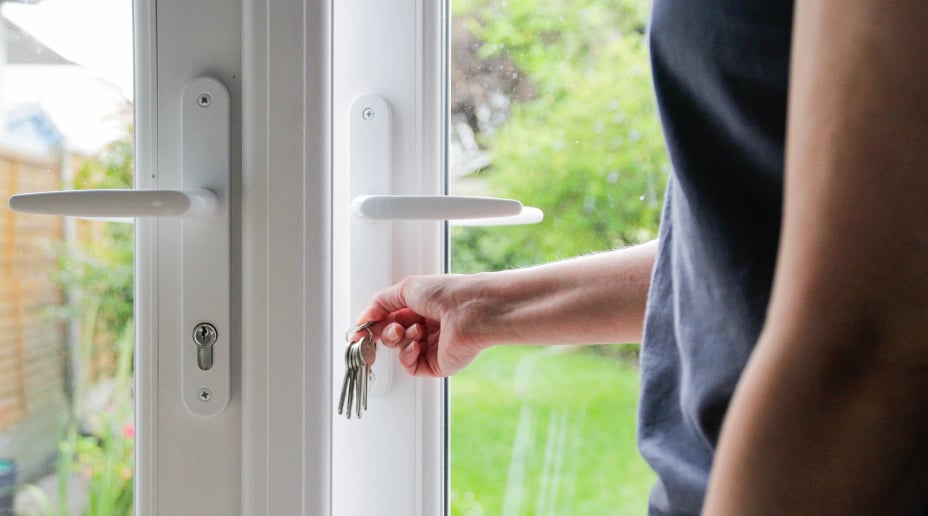
A multi-point locking system locks at various different points simultaneously when you turn the key. They're commonly found on uPVC doors and composite doors, including patio and French doors. You normally lift the handle to double lock the door before turning the key.
These systems typically have at least three locking points, but many have more for added security. The key part of the system is the euro cylinder, which controls all the locking points.
Because the euro cylinder is vulnerable to snapping attacks, it's essential to fit a secure cylinder that meets TS007 standard. The TS007 standard uses a 3-star rating system. You can achieve 3-star security by combining a 1-star cylinder with 2-star security door furniture, or by using a standalone 3-star cylinder. Look for cylinders with the BSI Kitemark and TS007 3-star accreditation for maximum protection.
Rim locks and night latches are mounted on the surface of the door rather than built inside of the door, with the latch fixed to the door frame. They contain a springbolt which can be deadlocked from the inside, and more secure versions can be deadlocked from the outside with a keyhole on the outside.
Unlike mortice locks, these are considered less secure when used alone. Many insurers require you to have additional security, such as a 5-lever mortice deadlock, if you only have a rim lock or night latch on your front door.
If your property has just a rim lock as the main security, check your policy requirements. You may need to add a mortice lock to meet your insurer's minimum standards.
Patio doors and French doors need secure locking because of their large glass panels and accessible location. Modern patio doors usually have a multi-point locking system with a handle to double lock the door before turning the key.
For extra security, many patio doors have additional bolts at the bottom of the door and top of the frame. If you have wooden French doors, fit a lock at a 90-degree angle to the wood grain to prevent the door splitting if someone tries to force it.
Some patio doors can be lifted off their tracks. To check, open the door and lift upwards while holding the handles. If there's excessive movement, you'll need an anti-lift device fitted into the top channel.
Most insurers require key-operated window locks on all ground-floor and accessible windows (such as those near flat roofs or drainpipes). This is often part of the lock requirements for higher-value contents cover.
With casement and uPVC windows, locks are usually fitted on the handles or at the top and bottom of the window. Sash windows often have a central locking bolt and two side bolts, allowing the window to open slightly for ventilation but not enough to let a burglar in.
All window locks should be key-operated and the keys should be removed when the locks are engaged, except in bedrooms that are occupied.
Swipe to view more
|
Lock type |
Where typically used |
British Standard |
Security level |
| 5-lever mortice deadlock |
Wooden and timber external doors |
BS3621 |
High |
|
Multi-point locking system |
uPVC and composite doors, patio doors |
TS007 (3-star cylinder) |
High |
|
Rim automatic deadlatch |
Front doors (with additional lock) |
BS3621 | Medium |
|
Window locks (key-operated) |
All accessible windows |
No specific standard |
Medium |
|
Patio door bolts |
French doors, sliding patio doors |
PAS 24 (complete doorset) |
High |
Check your home insurance policy documents to find out exactly which locks are the minimum security requirements for your insurer. If you're unsure what locks you have or which ones you need, contact your insurance provider for advice.
High security front door locks in the UK
When you're looking for high security front door locks, you'll find plenty of options designed to meet modern safety standards and keep your home protected.
Smart locks and automatic locks
Smart locks and automatic locks are becoming increasingly popular for their convenience. You can control them from your phone, grant access remotely, and some even lock automatically when you close the door.
That said, most insurers still require a traditional BS3621 lock alongside smart locks. Many smart locks aren't insurance approved on their own, so it's a good idea to check your policy wording before installation. Some newer models meet BS8621 or PAS3621 standards, which combine high security with keyless exit features, but you should always inform your insurer before fitting a smart lock to avoid invalidating your cover.
Choosing the best lock for your front door
The best lock for your front door depends on your door type, your location, and your insurer's requirements.
For timber doors, a five-lever mortice deadlock with BS3621 certification is the gold standard. Composite doors and uPVC doors typically use multipoint locking systems with euro cylinders – look for PAS3621 certification, which is the modern equivalent of BS3621 for these door types.
The Master Locksmiths Association can provide recommendations for approved locksmiths in your area who'll advise on the right locks for your home. It's also worth keeping a note of your lock's serial number – it can be useful if you need to make an insurance claim or order replacement keys.
Frequently asked questions about front door lock insurance requirements
-
Are you insured if you leave your front door unlocked?
-
How do I know if my door lock conforms to BS3621?
-
Does home insurance cover the cost of replacing locks?
-
Do I need locks on every external door?
Most insurers will not pay out if you leave your door unlocked, as it's considered a failure to take reasonable care of your property. Even if you're only popping out for a few minutes, an unlocked door could invalidate your claim if a theft occurs. This applies to all types of homes, including homeowners and student accommodation. Always lock up when leaving, even for short trips, to keep your cover valid and your belongings protected.
Check the faceplate of the lock or the strike plate for the BSI Kitemark or BS3621 marking. The faceplate is the metal part you can see when you open the door. Look for the British Standards Institute Kitemark symbol and the code BS3621 stamped on the plate. If you're unsure whether your lever mortice deadlocks meet the standard, a professional locksmith can verify this for you. It's worth checking, as having the right BS3621 locks can affect your cover and may even reduce your premiums.
Many policies include loss of keys cover, which pays for the replacement and fitting of external door locks if your keys are lost or stolen. Cover limits vary by policy level, typically ranging from £500 to £1,000 depending on whether you have a bronze, silver or gold level of cover. This is a common form of protection included in most home insurance policies. Always check your policy documents to confirm your specific limit, and remember this may also extend to locks on a uPVC door and any associated alarms or safes.
Most insurers require approved locks on all external doors, not just the front door. This includes back doors, patio doors and French doors. Multi-point locking systems, which secure at various different points along the frame, are often required for uPVC and patio doors. Some insurers also accept smart locks, provided they meet BS3621 standards and display the BSI Kitemark.
So, check your policy for specifics on which doors need which types of locks to ensure you're fully covered.